About Us

ISRA Books is a small, independent publishing house based in London, England.

The company specialises in publishing the literature of the East.  The religious thought and the poetry of this part of the world have been a considerable influence way beyond the lands of their origin and are an important part of world culture.  In publishing these works in careful and accurate translation, we hope to make them available to an English-speaking public and to play a part in preserving them for the enjoyment and illumination of the generations that follow us.

ISRA Books also believes in ethical book publishing.  Paper is core to a publisher’s business as is the cost of production.  ISRA Books believe less about profit than ensuring we are an ethical business.  We continue to work with our suppliers to improve the environmental credentials of our books.  Customers might expect to pay a little bit more for a quality hand bound product and ethically sourced book.  Please see www.prepsgroup.com and www.fsc.org for more information.
NOT FOR PROFIT

ISRA Books is a charitable organisation and the company articles are characterised in the same ways as other charities registered with the Charities Commission.

We are a NOT FOR PROFIT organisation established for purposes other than making money, one where some or all surplus revenues are used to further the intentions for which the organisation was established rather than to benefit the individuals with an interest in it.  Not-for-profit organisations in the United Kingdom are often charities, but may also include a wider group of organisations set up with intentions other than to make a financial gain.

ISRA Books was instituted to play a part in preserving the  cultural heritage of the East.  It is our intention to help safeguard this wonderful resource for the enjoyment and enlightenment of the generations that follow us.

Proceeds generated by the sales of our books and tickets for our events are paid back into our enterprise to ensure we can continue this important work for many years to come.

INTERACTION

ISRA Books regularly holds concerts of traditional and fusion Sufi music from South Asia.

Chai

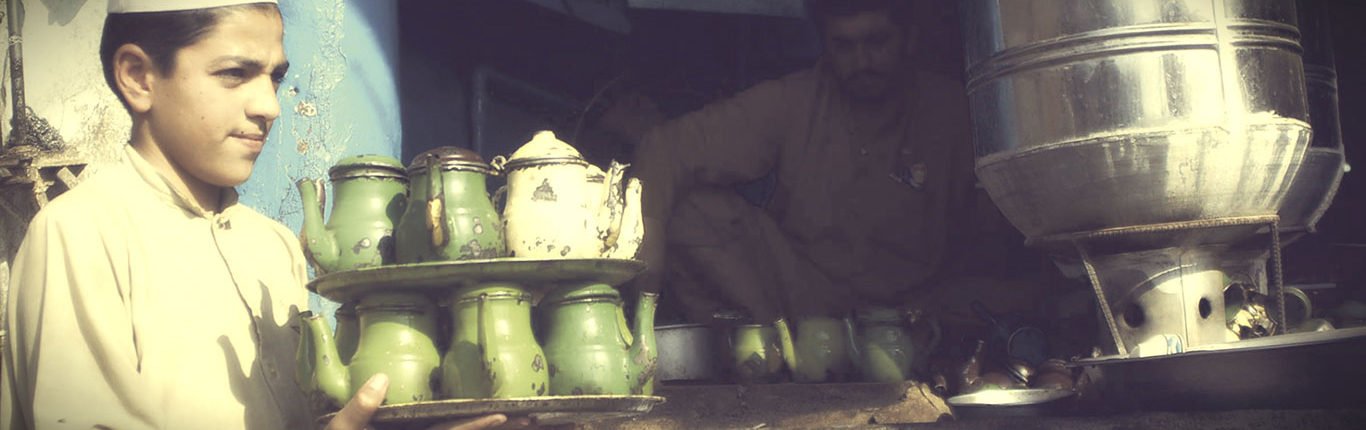
Chai is that hot tea beverage enjoyed throughout South Asia and beyond.  Tea plays an important role in encouraging dialogue all round the world and South Asian people drink chai  together and  talk to each other several times a day.

The British East India Company started the commercial production of tea in then-undivided India in the 19th century.

Just as in Britain, the afternoon chai is often accompanied with snacks.  As it is with eastern culture, chai is a sign of hospitality. If you prefer to have your chai the British way, that is black tea with a spot of milk, you are likely to be considered a Wilati or foreigner in India and Pakistan.

The origins of tea drinking

Legends relating to the origins of tea-drinking have been passed down from generation to generation.  One of the most popular of these legends dates back to 2700 BC and to the reign of the Chinese Emperor Shen Nung.

Shen Nung was known to be a skilful ruler, a creative scientist and a patron of the arts.  His far-sighted edicts required, among other things, that all drinking water should be boiled for hygienic reasons.

One day in summer, while visiting a distant region of his realm, he and his courtiers stopped to rest.  In accordance with his ruling, the servants began to boil water for the company to drink.  Dried leaves from a nearby bush happened to fall into the boiling liquid.  As a scientist, the Emperor was interested in the results, drank some and found it very refreshing.  So, according to legend, that was how tea was invented.

Tea and coffee houses act as centres for social interaction, providing people with a place to congregate, talk, write, read, entertain one another or pass the time, whether individually or in groups.  

Qawwali Chai is a unique platform that transcends cultural differences and exemplifies the strongly interconnected world of today.  It combines the pleasures and purposes of both Sufi music and the drinking of tea together.

Opening the heart

Through pleasant interaction of this sort, people from very different backgrounds may find that values and beliefs that are dear to them are also shared by other faiths and cultures.  Relaxing the mind and opening the heart together may bring both peace and understanding.  The heart is a garden where the gardener may cultivate compassion or fear, resentment or love.